What Is the Difference Between Korean and American Beef
Szechuan Beef vs Mongolian Beef, how exercise these ii differ?
Beef is a flesh of mature cattle and is the third nigh widely consumed meat all over the earth. Fresh beef meat is rich in various vitamins and minerals like zinc and iron.
Beef tin can exist prepared using different cooking methods and in diverse types of dishes. And in this commodity, we will tackle the difference between Szechuan and Mongolian beef.
One of the obvious differences Szechuan beef and Mongolian beef have are the ingredients used in preparing these cuisines, giving them a unique and distinct flavor. Szechuan beef is sweet and spicy in taste while Mongolian beef has a mild and plain flavour.
But before we tackle the rest of their differences one past i, let us first have a little overview well-nigh their history.
Szechuan Beef vs Mongolian Beefiness
Szechuan Beef vs Mongolian Beef: Origins
Szechuan beef and Mongolian beef are actually both Chinese dishes. Szechuan beefiness hails from Sichuan Province in southwestern China while Mongolian beefiness has no actual Mongolian origins, merely is believed that Mongolian beef hails from Taiwan.

Szechuan Beefiness Origin
At that place are eight traditional types of dishes a Chinese cuisine, which are considered as an integral part of Chinese civilization. These cuisine styles correspond to eight unlike provinces in Prc, namely: Zhejiang, Shandong, Jiangsu, Hunan, Fujian, Cantonese, Anhui, and Szechuan.
Szechuan is not just a beef recipe, but a type of regional cuisine. Also known as Sichuan or Szechwan, szechuan beef originated from the southwestern function of Mainland china, the Sichuan Province.
In 2011, Sichuan Province was recognized past UNESCO for its distinguished nutrient culture and declared equally a "City of Gastronomy ". Indeed, a very remarkable recognition as this was the first accolade a province in Asia received.

Mongolian Beef Origin
Dissimilar a traditional Mongolian cuisine that is native to Mongolia, the Mongolian cuisine in China and some parts of the US is actually not from Mongolia. It originated in Taiwan way back in the 1950s which was significantly influenced by a popular teppanyaki Japanese style.
This teppanyaki Japanese style cuisine uses an iron broiler to cook dishes at extremely hot temperatures. It has a very slight similarity with the bodily Mongolian cuisine coming from Mongolia.
In fact, about of the dishes in China with Mongolian names are actually not related to Mongolian culture. Hence, the Mongolian beefiness is typically a Taiwanese stir-fry and not a Mongolian cuisine.
Difference Between Szechuan Beef vs Mongolian Beef
So later learning the origins of Szechuan beef and Mongolian beefiness, it'south fourth dimension to get to know the meaning differences betwixt these ii. Just a heads up that the Mongolian beef we will be tackling is an American Chinese food and non the traditional Mongolian cuisine from Mongolia.
Translations
According to history, Szechuan is formerly the romanization of Sichuan, which translates to "four river". Jialing, Jinsha, Min, and Tuo are the four major rivers located in Sichuan Province.
While Mongolian is related to Mongolia, a boundless state in East Asia. In pinyin, Chinese Mongols are referred to as Měnggǔzú . As to date, the Chinese Mongolian population is over twice the actual natives of the Mongolia state.
Ingredients
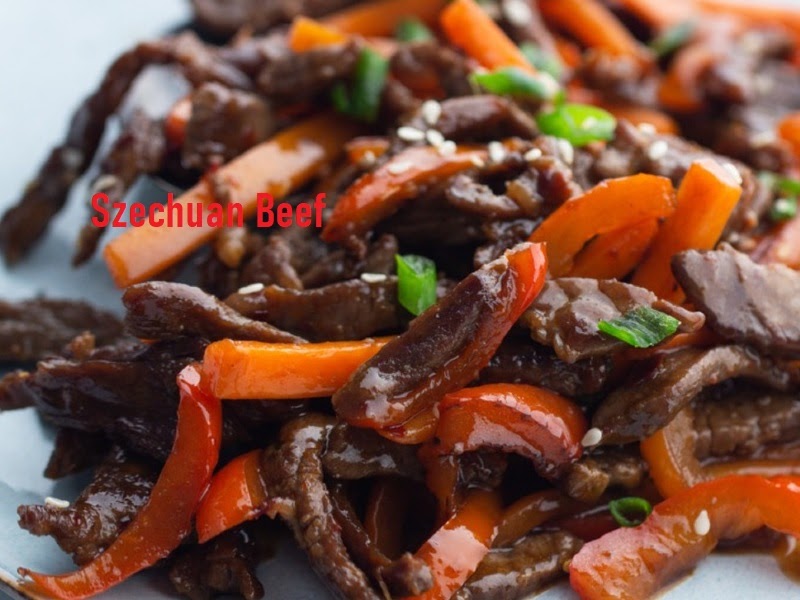
Sesame paste, peanuts, and ginger are the most mutual ingredients in Szechuan. A Szechuan is commonly consists of chili paste, cornstarch, rice, cooking vino, egg whites, soy sauce, sesame oil, cayenne pepper, brownish saccharide, Worcestershire sauce, onions, crushed chilli peppers, vegetable oil, peanuts, carrots, minced garlic, star anise, and scarlet bell pepper. A simple dish made from innumerable ingredients, making its taste more complicated.
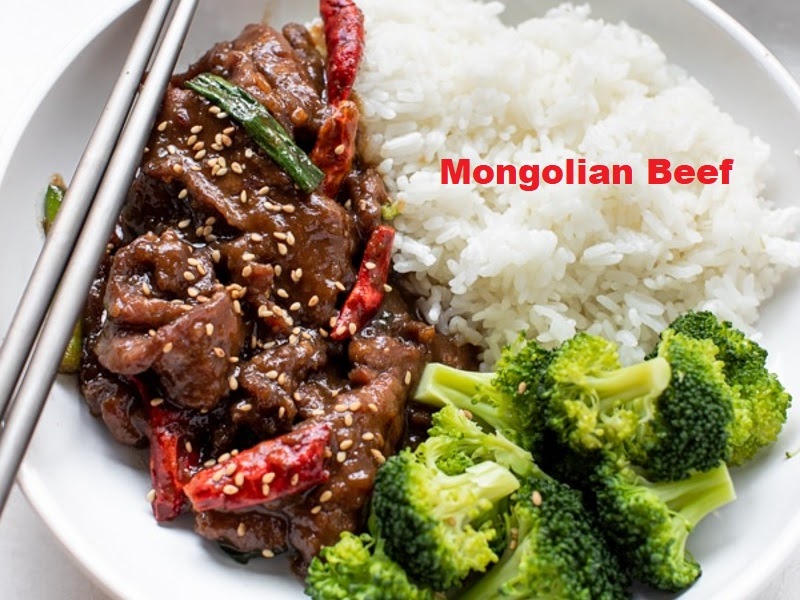
On the other hand, Mongolian beef's mutual ingredients are brown sauce, greenish onions, and sliced flank steak. Other ingredients a Mongolian beefiness has are chili peppers, soy sauce, hoisin sauce, scallions, cabbage, green onions, broccoli, ginger, and mushrooms. The Mongolian beef recipe tastes simpler compared to Szechuan.
Basically, Szechuan ingredients are mostly stale, pickled, and salted while Mongolian beef recipes are into fresh ingredients similar scallions and green onions.
Tastes
Since Szechuan and Mongolian beef have different ingredients, information technology also follows that the two differ in taste.
Sauce is the signature of Szechuan dish, mainly on spices and oestrus, while Mongolian is more on meat and vegetables. Szechuan peppercorns and bell peppers are among the primary ingredients of the Szechuan beef Chinese cuisine, while Mongolian's commonly used ingredients are steak, green onions, and brown sauce.
Mongolian beefiness tastes like a Chinese takeout and has a sweeter gustation compared to Szechuan. The Mongolian beef trademark is the stir-fry cooking method information technology uses.
Preparations
Making Szechuan beefiness recipe is somewhat easy, merely would require you enough fourth dimension to prepare the dish. Szechuan cuisine can be stir-fried, braised, and steamed. This beef Szechuan is made of thin slices of marinated beef stir fried in Szechuan sauce to achieve mouthwatering superbness. It is best served on steamed rice.
Meanwhile, a Mongolian beef recipe solely relies on stir-frying. For quick cooking, the beef and vegetables are thinly sliced. The beefiness, sauce, and the residue of the ingredients are stir-fried, ordinarily in a large wok with oil or water over high temperatures (above 500 Degrees Fahrenheit), to caramelize the beefiness. And same with beef Szechuan, Mongolian beef is best served with steamed rice only normally served on fried glass noodles.
Vegetables
If you are a vegan who loves beef recipes, a Mongolian beef recipe volition definitely satisfy your cravings. Since Mongolian beefiness contains fewer components, it has more vegetables compared to Szechuan.
When information technology comes to texture, Mongolian is way crunchier than Szechuan. The latter's crisis basically comes from its nut ingredients such as cashew nuts, sesame seeds, and salted peanuts.
Spices
Szechuan style has a hotness with a distinct tingly sensation considering of Szechuan peppercorn spices. Szechuan exhibits a sweetness and spicy flavor. It also has a citrusy taste since the peppercorn is from the citrus family. Its circuitous sauce is reddish in appearance.
Mongolian, on the other manus, is the complete reverse to Szechuan manner. The Mongolian beef is one of the Chinese beef dishes that rarely uses spices. Information technology also has a mild taste, with a sauce that is dark chocolate-brown in appearance.
More Nigh Mongolian Beef vs Szechuan Beef
Szechuan cuisine in People's republic of china usually uses rabbit, tofu, pork, and beef. While US Szechuan often served this dish with chicken, pork, and beef. The Chinese and American versions of Szechuan differ in terms of spiciness. The latter has a milder sense of taste than the Chinese version.
Meanwhile, Mongolian cuisine in China unremarkably uses lamb or beef (flank steak). Though the cuisine is not barbecued, Chinese are likely to label Mongolian dishes every bit Mongolian barbecue.
The US version, on the other hand, uses chicken, beef, or pork. Compared to Mongolian Chinese, Mongolian United states of america version uses less meat varieties, sauces, and ingredients.
Then, that is everything virtually Mongolian beefiness vs Szechuan beefiness. I promise that this article has aware y'all with the differences between these two Chinese foods. If yous call up this information is relevant, feel free to spread the news. Thanks for reading!
Source: https://asian-recipe.com/szechuan-beef-vs-mongolian-beef-what-is-the-difference-20109
0 Response to "What Is the Difference Between Korean and American Beef"
Post a Comment